The GLP-1 Revenue Trap: How Fiduciary Benefit Management Exposes the PBM Profit Playbook
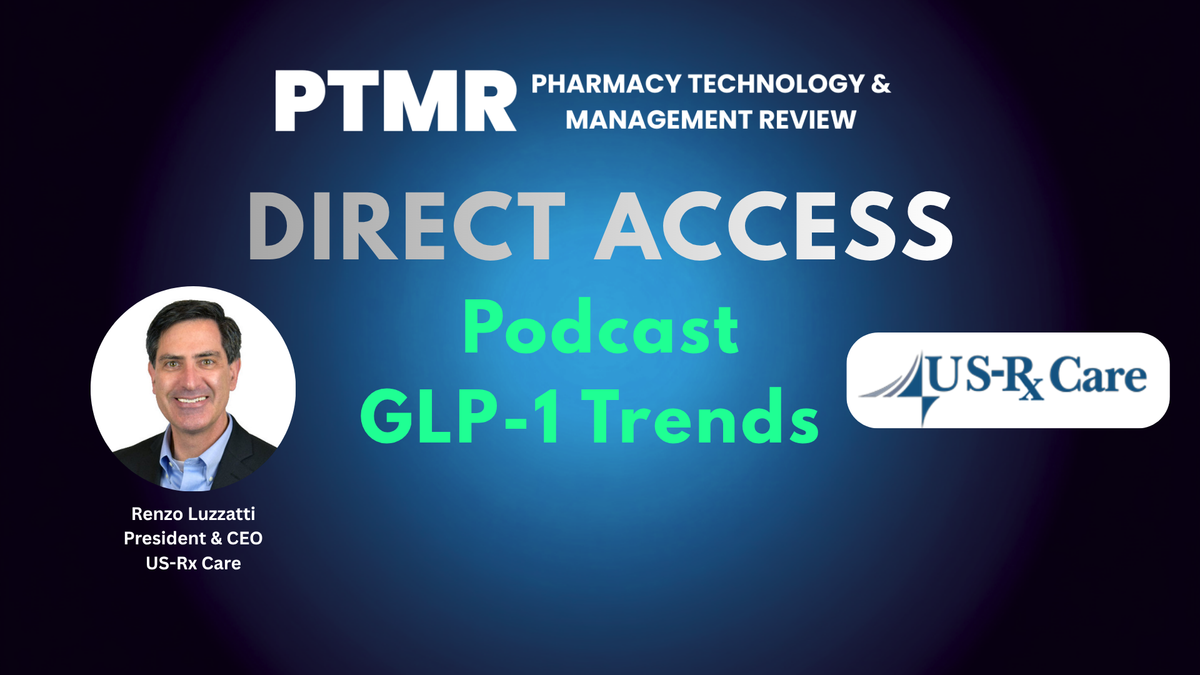
PODCAST | Direct Access | Renzo Luzzatti, President and CEO of US RxCare, joins the Direct Access podcast to discuss trends in GLP-1s, the fiduciary PBM model, and how the pharmacy benefit management industry is evolving to address rising costs and utilization.
The explosive demand for GLP-1 receptor agonists has fundamentally rewritten the rules of commercial drug spend. But while patients view these medications as clinical breakthroughs, the traditional Pharmacy Benefit Manager (PBM) infrastructure views them through a vastly different lens: the latest blockbuster to serve as the PBM industry’s primary engine of hidden revenue.
In this episode of the Direct Access podcast, PTMReview's Will Lockwood talks with Renzo Luzzatti, President and CEO of US-Rx Care. As the leader of a fiduciary PBM since 2007, Luzzatti brings a rare perspective to an otherwise opaque industry, operating under ERISA-defined fiduciary standards that mandate a complete lack of conflicts of interest.
The conversation pulls back the curtain on how the current PBM landscape manipulates GLP-1 coverage, how emerging cash-pricing mechanisms are bypassing traditional insurance, and why protecting community pharmacy access is critical to surviving the ongoing spending surge.
The New Revenue Engine: Replacing Humira
For years, adalimumab (Humira) reigned supreme as the ultimate dollar-volume driver for traditional PBMs, characterized by massive rebate flows from manufacturers designed to lock down market share. When biosimilars finally eroded that monopoly, traditional operators quickly pivoted.
"GLP-1s from a PBM perspective... have replaced Humira as the number one revenue generator," Luzzatti points out. "Massive amounts of money are going from manufacturers to PBMs to incentivize all kinds of ways to drive market share... There are a lot of programs in place that drive utilization for GLP-1s. It’s not necessarily in the best interest of the plan sponsor, but it’s just a reality."
When a PBM's business model profits off the gross cost of a drug rather than the efficiency of the spend, high-cost, high-volume drug classes become highly protected revenue centers. For self-funded employers, this structure has pushed GLP-1s to consume anywhere from 10% to 20% of their total claims volume.
Prior Authorization Paradoxes and the Weight Loss Dilemma
Most PBMs have introduced rigorous prior authorization (PA) protocols to manage this volume, yet these barriers are frequently more performative than clinical. Luzzatti notes that while standard PAs typically require a trial-and-failure history with a first-line therapy like metformin, the enforcement is often easily circumvented.
Furthermore, the divide between treating type 2 diabetes and managing weight loss leaves plan sponsors in a difficult financial bind. While employers recognize the long-term healthcare spend reductions that come with weight reduction, many simply cannot sustain covering the entire class at current commercial list prices.
The Cash Price Collision: Insurance vs. Direct-to-Consumer
One of the most disruptive trends in the current market is the emergence of direct-to-consumer (DTC) cash pricing, which frequently undercuts the net price established by traditional insurance networks—even after factoring in PBM negotiated discounts and manufacturer rebates.
This creates an intense conflict between consumer availability and legacy insurance rules:
- The Cash Limitation: Official manufacturer portals state that low cash prices are strictly prohibited from being combined with insurance or applied toward insurance deductibles and out-of-pocket accumulators.
- The Regulatory Intervention: Conversely, recent regulatory actions—including the Federal Trade Commission's (FTC) lawsuit against the "Big Three" PBMs over insulin pricing—are introducing major wrinkles. In certain instances, such as the Express Scripts framework involving Trump Rx, the system is being pressured to route insured patients toward more direct manufacturer options.
"Somewhere, these two are going to come together," Luzzatti notes. "If it does, then that opens up the potential that even for funded, adjudicated claims, those [lower cash] prices will be available. And that’s certainly our hope, because our goal at the end of the day is to deliver whatever medications are needed at the lowest available cost."
Protecting the Bedrock: The Community Pharmacy Mandate
As PBMs increasingly classify GLP-1s as specialty drugs to force utilization through their own wholly owned specialty pharmacies, independent community pharmacies are facing severe operational and financial squeezes.
Luzzatti stresses that protecting the community pharmacy infrastructure is a structural necessity for the healthcare system, not an idealist's preference. To combat independent pharmacy closures, US-Rx Care relies on an acquisition cost plus model for generic medications to ensure pharmacies are paid north of the Wholesale Acquisition Cost (WAC).
The Path Forward
With price reductions anticipated for major brands like Wegovy and Ozempic entering the next cycle, alongside the eventual introduction of competitive clinical alternatives and oral variations, market utilization will continue to grow.
For community pharmacies and self-funded plans alike, navigating this landscape requires escaping conflict-driven PBM models. Real transparency isn't achieved by chasing larger rebates on expensive drugs; it’s achieved by matching clinical necessity with the true lowest cost of acquisition. PTMR