SYNC 2027 Preview: Driving 'The Great Care Shift' Through Pharmacy Automation
Direct Access | Intelligent automation is emerging as a critical ally for cutting manual data entry, streamlining workflows, and freeing up crucial time.
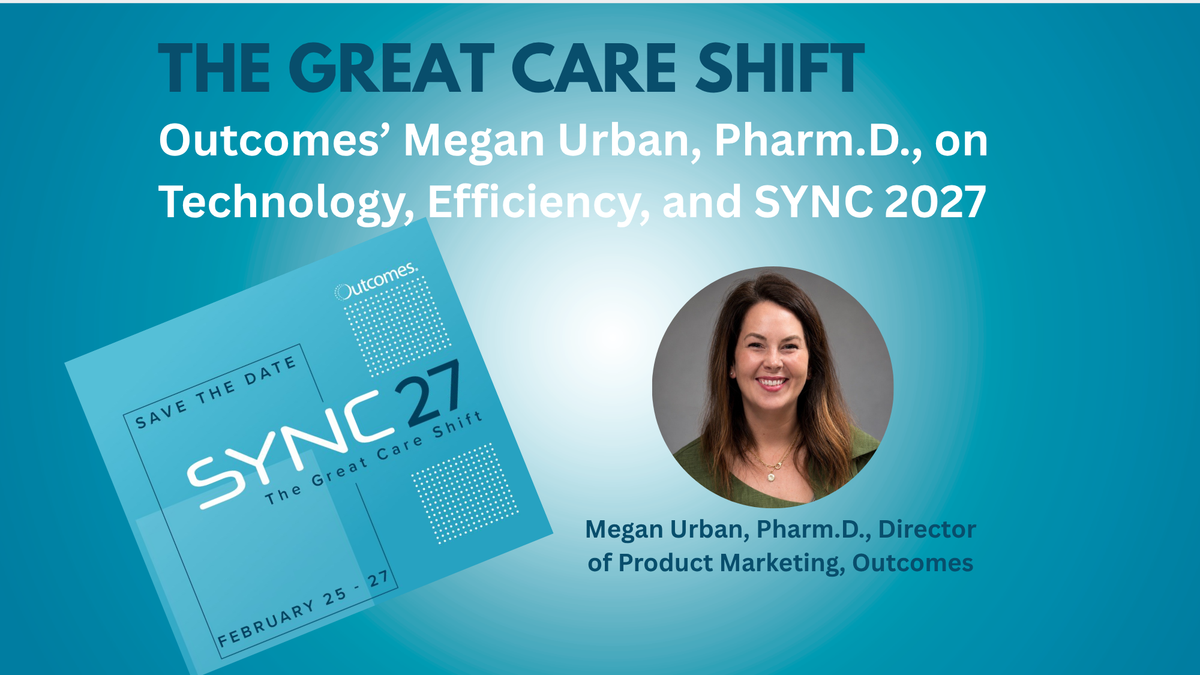
Pharmacy is undergoing a fundamental transformation driven by technology, evolving operating models, and growing healthcare demands. As administrative burdens weigh heavily on pharmacy teams, intelligent automation is emerging as a critical ally for cutting manual data entry, streamlining workflows, and freeing up crucial time. This operational shift enables pharmacists to practice at the top of their license, bridging critical care gaps in local communities. One pharmacy technology company is paying close attention.
In this interview, PTMReview Editor Will Lockwood talks with Outcomes Director of Product Marketing Megan Urban, Pharm.D., about how helping pharmacists navigate this “Great Care Shift" will be at the heart of the Outcomes SYNC 2027 Conference.
PTMReview: Megan, welcome. Outcomes has a major event coming up: The SYNC 2027 conference. What can attendees expect, and how does the event's theme set the stage for where pharmacy is headed?
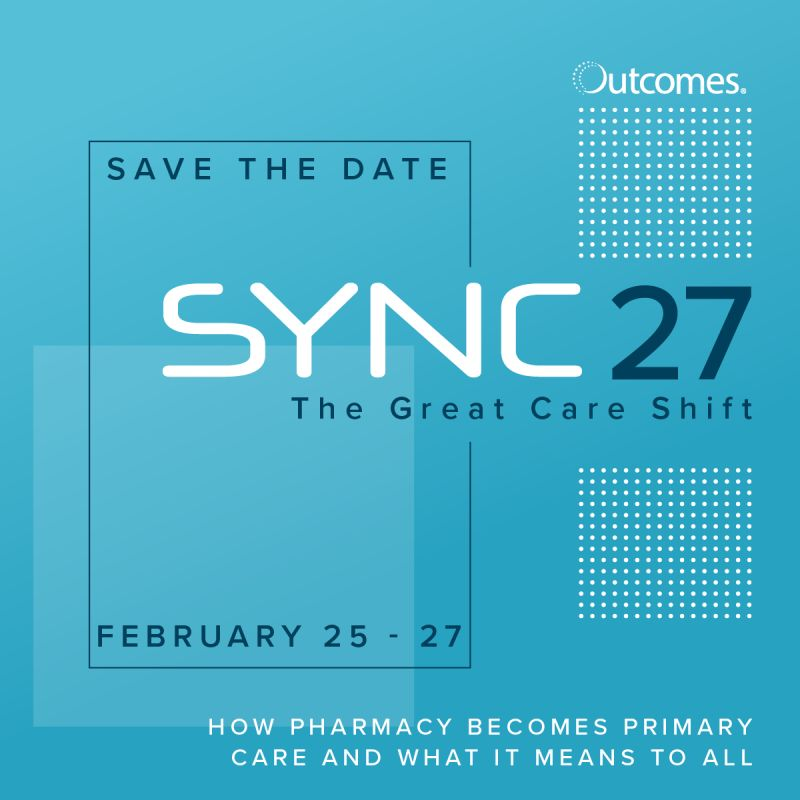
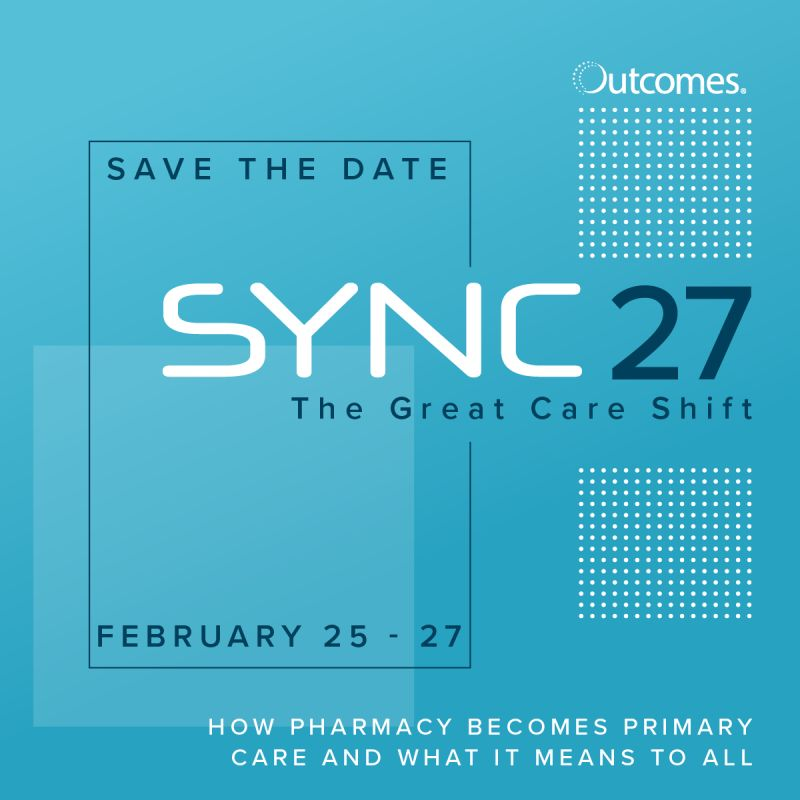
Megan Urban: Sync 27 will take place February 25 to 27, 2027 at the Signia by Hilton, in Orlando, Fla. Sync is really Outcomes’ way to celebrate pharmacists and who we are. Outcomes has a wide variety of products across three pillars: pharmacy, pharma, and payers. What the Sync Conference does is bring us all together. It really brings in different viewpoints so attendees are able to hear the different perspectives, and how we all fit into the clinical and healthcare ecosystem.
And, in fact, the theme of the 2027 conference is going to be “The Great Care Shift” and how pharmacy takes on a greater primary care role. We really want to highlight what that means for pharmacies as we shift to a different modality of offering care wherever pharmacy intersects with other healthcare providers. We are very excited, and we are working on finalizing the speakers, and the breakout sessions that will make Sync 27 a really, truly meaningful conference for all of our attendees.
Don’t miss a moment of SYNC ’27! Sign up to receive updates!
PTMReview: That theme of "The Great Care Shift" is critical. Tell me about your background and what led to your current role at Outcomes?
Urban: I have been a licensed pharmacist for 18 years. I have a very diverse background in both clinical work, including retail and hospital settings, and in product design and positioning. All this has led me to my most recent job at Outcomes.
PTMReview: At SYNC, you'll be addressing how pharmacies can take on a larger primary care role. Looking at the future, what are the specific clinical areas and technologies that will truly move pharmacy forward as an essential care access point?
Urban: Pharmacists are uniquely positioned as accessible healthcare providers in our communities. And in many instances, patients see their pharmacist more than their primary care provider. So we want to make sure we have the data and the technology to make pharmacists be successful as care providers.
Where I see the landscape of pharmacy going is toward test-to-treat modalities, which not only expand the role of a pharmacist, but allow them to have some prescriptive authority in certain states and for certain diagnoses. I also see pharmacists really having a meaningful role in patient care through comprehensive medication reviews and chronic disease management, because, again, patients see their pharmacist sometimes more often than their primary care provider.
Then there’s adherence. This has always been important, and we’re seeing it be central in the GLP-1 sector right now. Payers and different providers are not continuing coverage of a GLP-1 medication if they don't demonstrate adherence, and I think a pharmacist can really have a significant role in supporting and documenting adherence.
And then, finally, the last thing I would mention is the continued push for preventative care. Pharmacists have the ability to see things sometimes even before an annual visit at a doctor’s office, and we're making those touchpoints more readily. This is not about replacing those primary care providers. It’s about expanding care access.
Think about that from a rural perspective, for example. A lot of our rural areas are just really struggling when it comes to access to healthcare. And it hurts my heart to just think about the missing care and the care gaps that a lot of our patients have in those rural areas. But pharmacists are already embedded in these communities, so how do we make them a provider in the healthcare system for more than just dispensing medications?
PTMReview: To deliver on that promise of expanded clinical care, pharmacies need time. How are new technology and workflow automations supporting these evolving operating models behind the counter?
Urban: One thing to remember is that the patient doesn't know what goes on behind the counter, right? They don't know all the different steps the pharmacy takes with a prescription from the time that it's received to the time that it enters their hand. But those behind the scenes workflows are critical and technology is what allows pharmacy businesses to be scalable.
We can also use technology to support pharmacies in identifying patients that may need additional assistance, whether that's through a clinical intervention, evaluation, or even something else in the clinical sector review process. We can coordinate refills in a smart way that makes it a benefit to the patient and to structure monthly touchpoints. Pharmacists continue to be a very accessible point in the healthcare system, and we want technology that makes it not only easy for patients to have these monthly touchpoints with the pharmacy, and allows pharmacists to practice at the top of their license. We want pharmacists to be able to be part of the healthcare ecosystem and ultimately make an impact for patients, and we want technology that complements these efforts along the way.
PTMReview: When you look at operational complexities, what are the most critical ways technology can help pharmacies transition from manual to automated processes today?
Urban: I have seen firsthand how much time gets pulled away from patient care by operational complexities. What's exciting is that now there is almost a renaissance in pharmacy management software systems and new technology that is not only helping us go faster, but it's fundamentally changing how we practice. At Outcomes, as an example, we're seeing technology being used as a strategic ally that enables our pharmacies to move through complex workflows more proactively, taking away a lot of that administrative burden and all the operational minutia so that pharmacists play a bigger role in patient care.
PTMReview: What key technologies is Outcomes focusing on right now to eliminate that administrative burden?
Urban: One of the biggest automations that we've been working on recently is our automated data entry, which maps incoming prescriptions directly into the pharmacy management system fields. This is available right now in our Rx30 software, and is coming soon for ComputerRx. We’re seeing this reduce the work required by manual data entry by almost 80%. And if you're thinking about just the life cycle of a prescription going through the adjudication process, even just decreasing that one step by 80% is a big win for pharmacies.
PTMReview: This is an important evolution of the e-prescribing workflow, right?
Urban: Absolutely. Prescribers have really adopted e-prescribing as a system, of course. So when pharmacies are seeing the majority of prescriptions coming in that way, it is important to have a solution that automates the pharmacies’ process and decrease that data entry pain point. It also reduces the friction in other ways, for example, training new staff.
PTMReview: Wonderful. There’s clearly a lot of momentum building as we head toward SYNC 2027, and plenty of good information still to come.
Urban: Absolutely, yes.
PTMReview: Thanks for your time and for sharing your viewpoint, Megan. PTMR
Don’t miss a moment of SYNC ’27! Sign up to receive updates!